

"This company has always been a 'legendary presence' in my mind, a benchmark that inspires me in the industry."
This is how Cathy Huang, founder of CBi China Bridge, described Livework Studio, the world’s first service design firm.
Last Friday (August 9), this "legendary" company made a surprise appearance at CBi. Luis Alt, co-founder and partner of Livework Studio, traveled halfway across the globe from Brazil to Shanghai to join the CBi Service Design Salon (SDN SH Meetup), marking one of the longest physical journeys in the history of service design collaboration.

Luis Alt: A Trailblazer in Service Design
As a partner at Livework Studio, Luis Alt established the firm's Brazil branch, introducing service design to South America for the first time and becoming a leading evangelist in the region. He launched Latin America’s first design thinking course and authored the bestseller “Brazilian Design Thinking”, the first-ever design thinking book published in Portuguese, which significantly advanced the discipline's reach and impact. For this special occasion, co-hosted with SDN Global Service Design Network Shanghai, Luis Alt shared cutting-edge service design insights and business strategies with guests from industry leaders like LVMH, Shanghai Foreign Service Group, and Tongji University.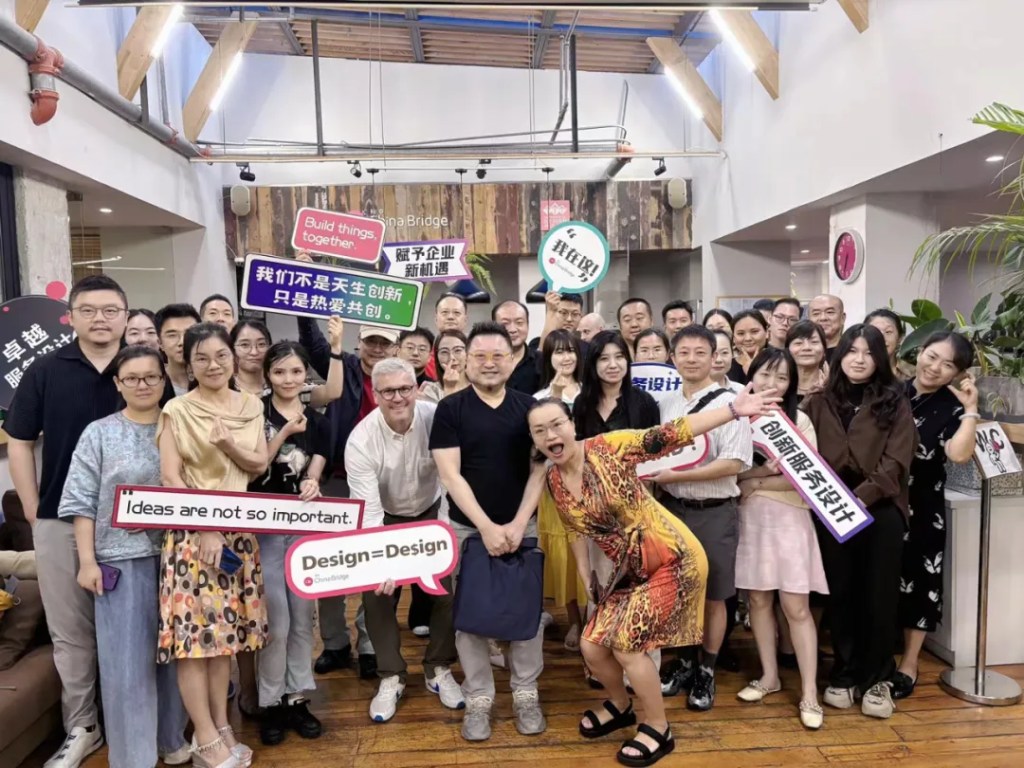
01 Revealing the Secrets: Service Design Award Evaluation Framework
If you’ve ever participated in a service design competition, you may have noticed that 99% of competitions lack a transparent and systematic evaluation framework. In Luis’ view, many services fail to fully implement as planned or neglect a genuine user perspective, making it challenging to measure the success of service design projects quantitatively. Luis recently served as a judge for the “2024 HOME+ International Service Design Competition,” China’s first competition focused on service systems for the home. Alongside Cathy Huang, he evaluated submissions as part of the judging panel. Luis, a seasoned judge for numerous international service design awards, has chaired the SDN Global Service Design Awards for three consecutive years. During the Meetup, he shared his five-dimensional evaluation framework for service design projects:1. Challenges
- What problems or challenges does the project address?
- How difficult are these challenges?
- What is their global relevance?
- How critical are they to the organization?
2. Methodology
- How does the project uncover user needs?
- How are stakeholders engaged in co-creation?
- What was the execution process?
- What tools or methods were used to convey design ideas, workflows, and results?
3. Outcomes
- How does the project impact organizational transformation?
- How effectively has the project been implemented?
- What are its originality and level of innovation?
4. Submissions
- How is the concept visualized?
- How compelling is the storytelling through videos or prototypes?
- Is the project’s message clearly articulated?
5. Bonus
- Did the project solve the organization’s challenges?
- How sustainable are the results?
- Did the project adhere to ethical standards?