

Anyone who has traveled to Zhongwei, Ningxia has probably seen it in Xiaohongshu travel guides, travel websites, or curated group-trip recommendations: a stunning desert resort hotel set right in the middle of the sands — Star Hotel.
 Star Hotel is an immersive “hotel + stargazing” vacation brand built on the unique desert ecological resources of the Shapotou National 5A Scenic Area. With starlight, exploration, and poetry as its core concepts, and supported by multiple business formats, it has developed into a wild-luxury vacation IP integrating desert adventure, astronomical observation, cultural experiences, and eco-resort living. Today, it has become one of the most talked-about stargazing travel destinations in Northwest China.
 Star Hotel is an immersive “hotel + stargazing” vacation brand built on the unique desert ecological resources of the Shapotou National 5A Scenic Area. With starlight, exploration, and poetry as its core concepts, and supported by multiple business formats, it has developed into a wild-luxury vacation IP integrating desert adventure, astronomical observation, cultural experiences, and eco-resort living. Today, it has become one of the most talked-about stargazing travel destinations in Northwest China.
01 Why Co-Create Through Service Design?
The desert wild-luxury hotel discovered something important: guests want scenery, but they also want experience.
The wind and sand of the desert are a real test of hotel service. Once “Desert Star Hotel” became a representative destination for social-media check-ins, high-net-worth guests willing to pay for experience were no longer seeking only beautiful desert views. What they wanted was the ability to enjoy quality accommodation, effortless sand sliding, and stargazing in comfort — all in the middle of the desert. As a benchmark for desert stargazing vacations, Star Hotel — together with the clustered Diamond Hotel and S Tent — enjoys the natural advantages of desert + starry sky, while positioning itself across different price segments. Yet several bottlenecks remained difficult to break through in service operations:- Across the three hotels, the teams lacked clear positioning and shared consensus on who the core customers are and what kind of service experience should be created for them.
- The desert climate creates a “natural experience shortcoming”: if guests happen to encounter a sandstorm during their stay, and nightly stargazing depends entirely on luck, what can the hotel do when guests complain that “there’s nothing to do”?
- The team wanted to innovate, but feared “stepping into a pit”: with limited supplies and a remote location, every “new service” felt risky, and many ideas stopped at the brainstorming stage without becoming reality. How could the team create unlimited service imagination under limited conditions?
STEP 2 | Use the User Journey Map to “Draw Out” Vague Pain Points
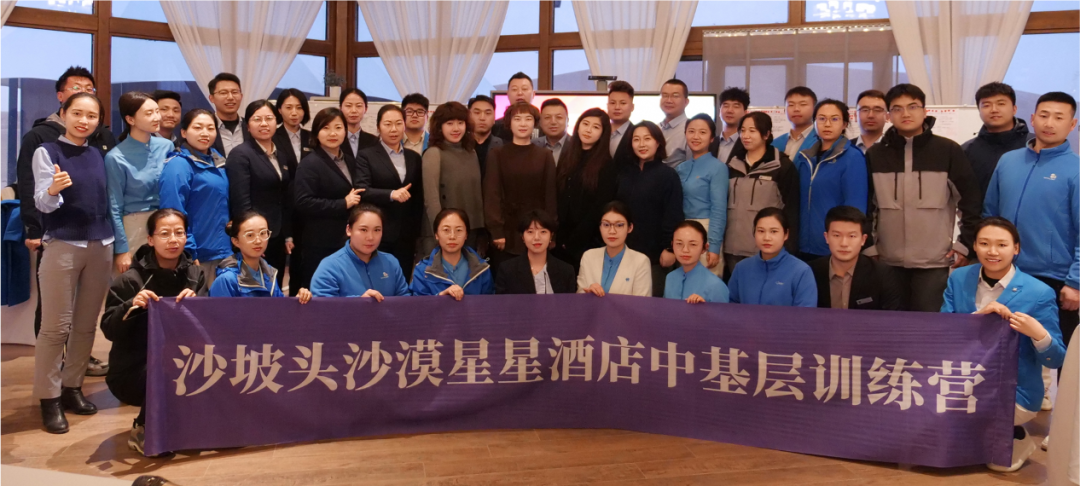
The co-creation workshop was held in the Sun Hall of Star Hotel. In this distinctive star-shaped space surrounded by desert, leaders from all the key service teams across Diamond Hotel, Star Hotel, and S Tent — including housekeeping, food and beverage, training, engineering, and security — gathered together for this cross-department co-creation session designed to break silos.STEP 1 | Learn How to Truly Get Close to Customers, So Positioning Is No Longer “A Shot in the Dark”
“Star Hotel’s main customer group is parent-child families.” “But do parent-child families really like complex science education?” “When couples come to the desert, do they care most about the stars — or about privacy?” To break away from “experience-based assumptions,” China Bridge brought professional customer interview techniques from service design and designed dedicated learning and practice sessions. Rather than simply giving answers, the goal was to teach the team how to fish: how to interview real customers, and how to convert those interviews into insights. By directly facing customers in this way, China Bridge worked together with the hotel team to define the hotel’s typical customer groups, turning vague audiences into precise profiles. Based on deeper customer understanding, the team then anchored the direction of experience design through experience keywords:- Star Hotel would focus on an experience of exploration for parent-child families
- Diamond Hotel would create a sense of romance for couples and honeymoon guests
- S Hotel would create a free-spirited experience for younger groups of friends
STEP 2 | Use the User Journey Map to “Draw Out” Vague Pain Points
China Bridge guided the Star Hotel team to understand a core service design principle through practice: “A user journey is not a checklist of processes. It is the customer’s emotional curve.” Teams from each hotel took sticky notes in hand and, step by step, mapped the journey from the expectations customers have when booking to the memories they take away after departure. Along the way, departments raised issues such as:- Front office: “During peak check-in periods, staffing is insufficient, and customers waiting for shuttle vehicles have a poor experience.”
- F&B: “At peak buffet dinner time, the restaurant becomes overcrowded,” and “Because the hotel is in the desert, it is hard to get food outside regular meal times.”
- Activity team: “When a sandstorm happens, customers cannot go outside, and the experience naturally loses points.”
STEP 3 | Innovate the Highlights: Turn the “Wind and Sand Problem” Around into a Signature Service
“If customers can only stay in their rooms during windy, sandy weather, what else can we offer?” “How can both parents and children in a family trip each enjoy themselves?” Using professional brainstorming methods and a large set of innovation stimuli, China Bridge helped the hotel team generate new service ideas, such as:- For sandstorm weather: create a “Desert Adventure” weather-limited experience, offering guests customized sandstorm-themed afternoon tea, relaxation journeys, and special desert-style photo shoots. In this way, the frustration of not being able to go out becomes a unique on-property experience.
- For parent-child families: launch an “Attention Star” special service, in which eligible children receive an “Attention Star” badge at check-in. Children wearing the badge can receive special care from staff in guestrooms, restaurants, and activities, freeing parents’ attention and allowing both adults and children to enjoy themselves more fully.
- seasonal healing experiences such as Floating Singing Bowl therapy
- an educational-and-fun activity called Star Voyage Adventure
- customized wedding services at Diamond Hotel, where romance serves as the key experience keyword
03 The Value of Co-Creation: Not Just 25 Service Highlights, but a Team That Knows How to Innovate
This co-creation effort did not stop at “coming up with ideas.” Throughout the process, China Bridge carried the team through practical learning in service design methodology:- From empathizing with customers, to mapping experience journeys, to identifying opportunity points, to innovating services with scientific methods, every participant became a future internal champion for pushing service design forward in their own department.
- Through service blueprint co-creation, each idea was further broken down into actionable steps: who will do it, how it will be done, and how the results will be verified.
04 The Magic of Service Design: It Does Not Give You Answers — It Teaches You How to Find Them
When the China Bridge team finished the co-creation and left, the person in charge at Star Hotel said: “Innovation is the key factor that keeps us unbeatable in the market. This service design co-creation has practically developed some innovative service concepts that can truly be applied in hotel operations. In the past, when we wanted service innovation, we relied on flashes of inspiration. Now the team knows that innovation is discovery with a method.” The brilliant desert sky has always been there. But only with the logic of service design, and a truly customer-centered heart for service design, can “watching the stars” become an experience that is memorable, shareable, and worth coming back for. Service design has never been about simply leading people to come up with ideas. You can come up with countless ideas, but if you do not know how to choose among them, if you do not understand priority and sequence, then you cannot improve the customer experience as a whole, nor can you build long-term, continuous customer relationships. Service design is about bringing the team back to the user, step by step clarifying the underlying logic of the business, so that the team clearly knows:- what to do
- what not to do
- what to do first
- what to do later
- How can you quickly build innovation momentum in your own industry’s experience offering?
- How can your “distinctive DNA” become a real service advantage?
- How can a team move from working separately to innovating collaboratively?