

In an economic downturn, conversations such as “cut another 10% from the budget” and “lower the price or we’ll switch suppliers” have become increasingly common between businesses.
Many companies conclude that business is simply getting harder and opportunities are disappearing.
But downturns are not the end of opportunity.
While they eliminate homogeneous, low-value business models, they also create more precise, more efficiency-driven needs — waiting to be discovered by companies that truly understand their customers.
Step Out of the Price War and Go to the Front Line to Find Real Needs
Passive price cutting is often a substitute for deeper thinking. The real starting point for a breakthrough is to actively uncover what customers actually need. As the market became trapped in increasingly intense price competition, office-space solutions provider Dobe identified an important shift: Companies trying to reduce costs were not saying “we don’t want to spend.” They were saying: “We want to spend on the right things.” At the same time, demand for flexible workplace solutions was rapidly emerging. But as a relatively new entrant to this space, how could Dobe avoid the trap of solving false needs and identify the pain points that genuinely mattered? There was only one answer: go deep into users’ real lives and find the real demand. Dobe partnered with China Bridge on a two-month in-depth research program. The project focused on three core customer groups, examined mainstream office campuses and their weaknesses, and broke down more than 24 leasing scenarios to identify the needs that mattered most.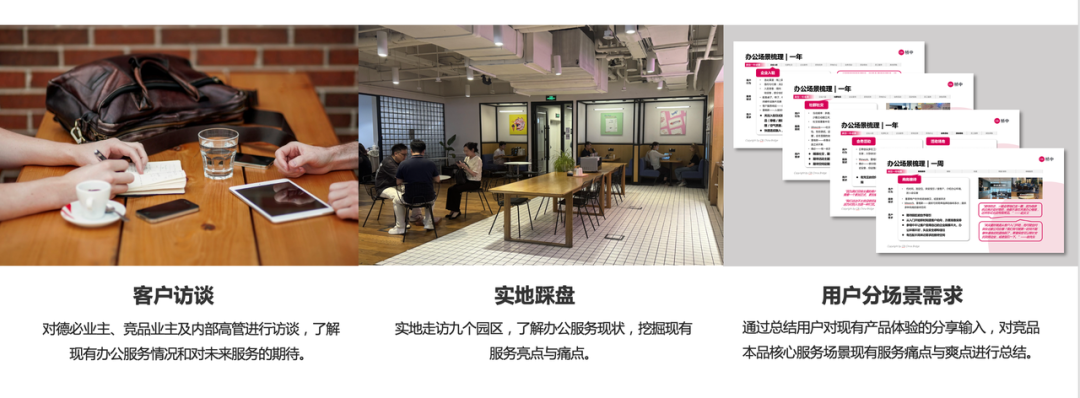 What we ultimately discovered was simple:
Customers were never simply “too price-sensitive.”
They were willing to spend money where it created real value.
Even a small expense felt worthwhile if it solved an important problem.
But even a small amount felt wasteful if it came from hidden costs, inefficiency, or something they simply did not need.
What we ultimately discovered was simple:
Customers were never simply “too price-sensitive.”
They were willing to spend money where it created real value.
Even a small expense felt worthwhile if it solved an important problem.
But even a small amount felt wasteful if it came from hidden costs, inefficiency, or something they simply did not need.
No More Hidden Costs: Make Every Expense Visible
So what is worth paying for — and what is not? By deeply analyzing user behavior and needs, China Bridge identified three major answers. 1. Make Hidden Costs Visible In an age of information overload, finding the right office has itself become a time-consuming and resource-intensive task. On one hand, most leasing platforms display only basic information such as floor area and total rent. Critical details — including what property management fees actually cover and what additional charges may apply — are often unclear. As a result, users cannot easily understand what exactly they are paying for, or whether the price is justified. On the other hand, pricing models vary widely. Some spaces are priced by workstation. Others are priced by square meter. Customers are forced to spend significant time comparing and filtering options, only to discover additional hidden costs after visiting the property in person. This wastes time and makes decision-making even harder. Put simply: Customers dislike high prices, but they are even more afraid of choosing a “cheap” option that becomes expensive later. The real value a workplace service provider should offer is therefore: transparent and predictable costs. 2. Eliminate Low-Value Administrative Work A company may want to expand into new markets, only to find that cross-city operations are slowed down by repeated site visits, separate contract negotiations, and inconsistent service standards. It may want distributed teams to communicate more effectively and feel a stronger sense of belonging, but the management costs of operating across multiple locations can become overwhelming. What customers really want is much simpler: They want to expand into multiple cities without repeatedly starting from scratch. They do not want to worry about different contracts, different service models, and different operating standards in every location. They want to replicate a consistent workplace experience easily — while saving both money and time. A company’s energy should be spent on its core business. It should not be consumed by the administrative friction of managing offices across cities. That is one of the most practical needs of businesses in the era of distributed work. 3. Maintain Quality — and Professional Image Today’s employees are no longer satisfied simply because they have a desk. The quality they expect is practical, not extravagant: Good natural light. Greenery. A gym in the building. Spaces for resting at lunchtime. Family-friendly or childcare-friendly facilities. They do not want budget pressure to force them to compromise on health or everyday quality of life. At the same time, companies also care about professional image. Business meeting spaces need to feel credible and polished. Shared areas should feel contemporary, youthful, and thoughtfully designed. The workplace needs to support the professionalism of business while still accommodating the realities of everyday life. Few customers are willing to pay unnecessary premiums. But they do not want to accept low quality simply because the price is low either. The real expectation is: lower cost without lower quality. Customers want a better balance between cost and experience.Value Co-Creation Workshops: Building a Flexible, Menu-Based Service Model
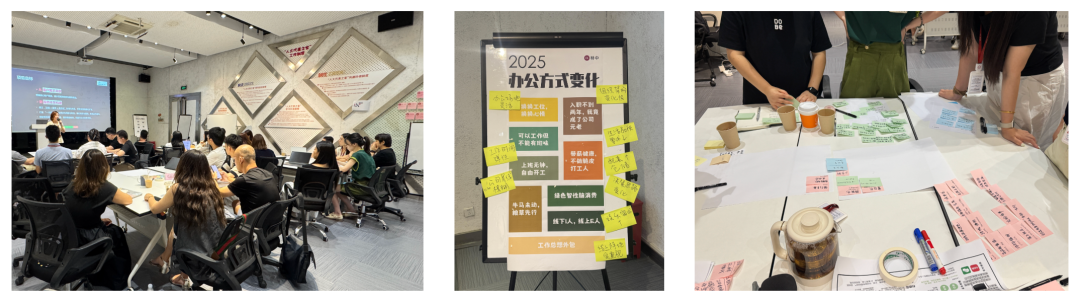 Once the real needs had been clearly identified, China Bridge facilitated a series of value co-creation workshops with Dobe’s core team.
The goal was to translate those needs into innovative solutions and begin shaping a new flexible-office product and service model.
Introduce Menu-Based Services
All previously hidden costs were made visible.
Rent, property management fees, and supporting services were clearly listed.
Customers could then select services according to their actual needs.
Every expense became understandable and traceable.
No more “mystery bills.”
Activate the Advantage of a Multi-City Network
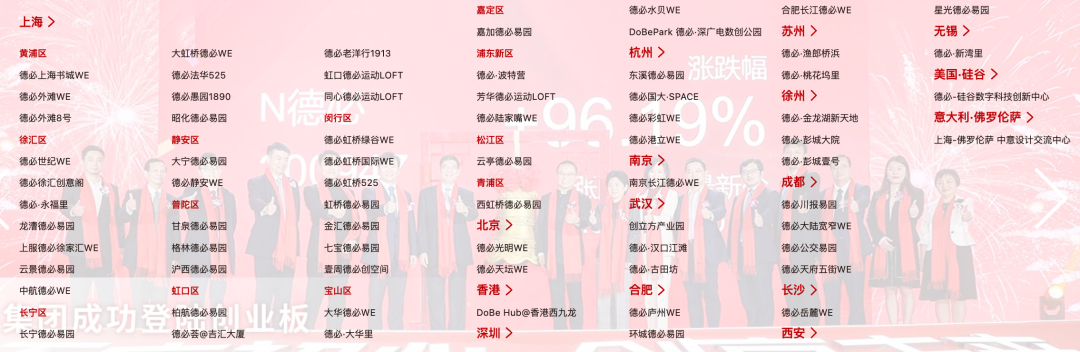
Leveraging Dobe’s presence across 14 cities, the new model connected cross-city workplace resources and standardized contract services.
For companies operating in multiple locations, this reduced repetitive communication and administrative friction.
Instead of rebuilding the process every time they entered a new city, businesses could access a more consistent and efficient experience.
Once the real needs had been clearly identified, China Bridge facilitated a series of value co-creation workshops with Dobe’s core team.
The goal was to translate those needs into innovative solutions and begin shaping a new flexible-office product and service model.
Introduce Menu-Based Services
All previously hidden costs were made visible.
Rent, property management fees, and supporting services were clearly listed.
Customers could then select services according to their actual needs.
Every expense became understandable and traceable.
No more “mystery bills.”
Activate the Advantage of a Multi-City Network
Leveraging Dobe’s presence across 14 cities, the new model connected cross-city workplace resources and standardized contract services.
For companies operating in multiple locations, this reduced repetitive communication and administrative friction.
Instead of rebuilding the process every time they entered a new city, businesses could access a more consistent and efficient experience.
 Build a Shared-Resource Ecosystem
High-quality spaces, greenery, business meeting environments, and other resources across different locations were integrated into a shared ecosystem.
This allowed the workplace experience to improve without requiring every client to independently bear the full cost.
The model delivered both:
everyday comfort for employees
and
the level of professionalism required for business meetings.
Shared resources reduced costs.
Better experiences increased perceived value.
This way of working did more than generate new service ideas.
It also helped different departments within Dobe reach a shared understanding of the core customer profile.
More importantly, it enabled teams to build a new product and service system around actual user pain points.
Abstract frustrations were translated into tangible, implementable service features, making the value of the offering easier for customers to perceive.
Build a Shared-Resource Ecosystem
High-quality spaces, greenery, business meeting environments, and other resources across different locations were integrated into a shared ecosystem.
This allowed the workplace experience to improve without requiring every client to independently bear the full cost.
The model delivered both:
everyday comfort for employees
and
the level of professionalism required for business meetings.
Shared resources reduced costs.
Better experiences increased perceived value.
This way of working did more than generate new service ideas.
It also helped different departments within Dobe reach a shared understanding of the core customer profile.
More importantly, it enabled teams to build a new product and service system around actual user pain points.
Abstract frustrations were translated into tangible, implementable service features, making the value of the offering easier for customers to perceive.