

Magnifying glasses, gloves for frozen sections, free hot tea… when supermarkets turn service into a standard package that “everyone has,” customers’ sense of delight starts to resemble a leaking shopping bag — fully functional, yet without warmth. In a market where so many supermarkets are all competing in exactly the same way, Rainbow Digital Commercial chose to step out of the cycle of “if you have it, I have it too.” Together with China Bridge, it used service design to turn invisible details into something customers could truly feel — a sense of being cared for.
Today, in a world dominated by algorithms and traffic, competition in retail is no longer about comparing products against products or prices against prices. It is about this: who understands customers better, and who can make people feel understood.
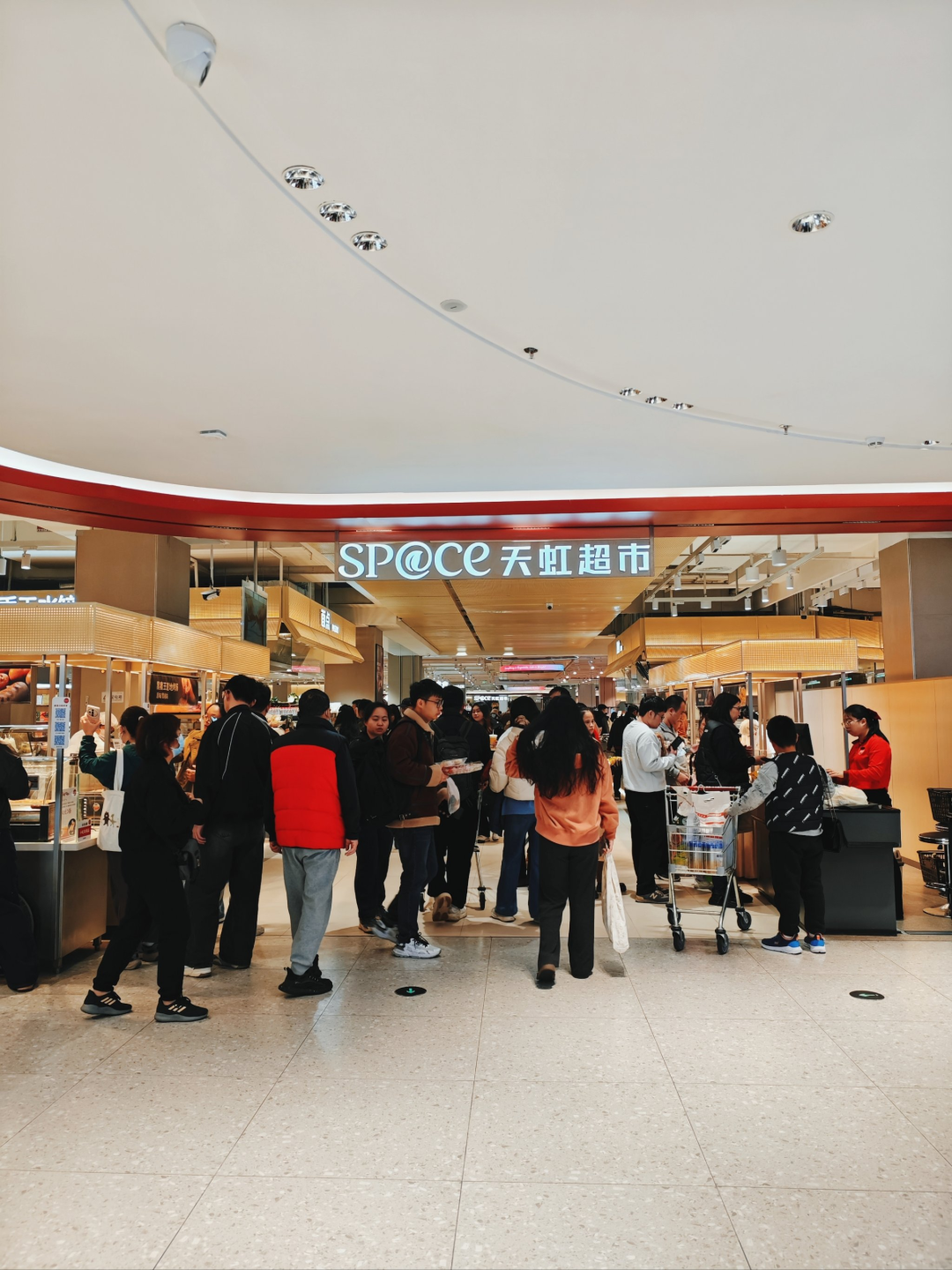
As one of the most representative retail brands in southern China, Rainbow has long been an industry pioneer, from digital transformation to omnichannel operations. But while the industry was busy competing on efficiency, traffic, and visual presentation, Rainbow chose to ask itself a different question:
Are we still providing service that makes people feel cared for?
The answer pointed back to service — not just a phrase like “welcome,” but a kind of warmth that says you are understood, you matter. And that was when Rainbow turned to China Bridge.
01 Customers Have Changed. Service Cannot Stay Where It Was Yesterday.
In recent years, everyone has been talking about “experience.” But for many brands, experience ends up meaning little more than “store renovation,” “visual refresh,” or “smart system upgrades.” The problem is — none of these can explain why customers still feel anxious in-store, or why staff may greet people with a smile while customers still walk away feeling cold. In our research, we found three common phenomena:- employees feel at a loss: they do not know what actually counts as “good service”
- systems look only at data: they focus on acquisition, conversion, and repeat purchase, while overlooking emotional touchpoints
- experiences lack warmth: customers receive convenience, but not resonance
02 A Service Transformation from “Looking Outward” to “Looking Inward”
China Bridge led the Rainbow team to work from three dimensions — customers, employees, and systems — and used a three-step service design approach to complete a systematic upgrade from physical space to service mindset, making the “feeling of service” truly land.1) Enter the real scene: listen again to frontline staff and customers
This time, we did not start from KPIs. We started from the scene itself. During the research phase, China Bridge led the Rainbow team through immersive observation and interviews — not questionnaires, not satisfaction surveys, but repeated rounds of quietly watching and carefully listening. We saw:
- a customer hesitating in front of the fresh-food section, wanting to ask staff to help process fish or shrimp, but unsure whether that was possible
- a parent trying to comfort a child while checking out, while also worrying that customers in line behind them were becoming impatient
- a pet owner lingering at the entrance, hesitating over whether they could bring their pet inside
2) Visualize the user journey: turn pain points into innovation opportunities
Based on these observations and studies, the China Bridge team mapped the full experience journeys of multiple user types — family shoppers, younger groups, pet owners, and others — identified 10 key pain points, and distilled two major experience keywords: reassurance and warmth.
3) Cross-department co-creation: make service doable and feelable
This project introduced a service design co-creation method. Under China Bridge’s facilitation, Rainbow’s different departments — operations, strategy, technology, marketing, and others — together with frontline staff were mixed into multidimensional groups to brainstorm and co-create service content, while aligning language and standards. What we found was that the biggest challenge many companies face is not a lack of ideas. It is this: how to make real cross-department collaboration happen, and how to make service standards truly land.
The co-creation mechanism turned “service optimization” from being merely a headquarters task into a collective action starting from the frontline and from the experience itself. It allowed every employee to clearly understand:
What should I do so that the customer will truly feel cared for?
What we found was that the biggest challenge many companies face is not a lack of ideas. It is this: how to make real cross-department collaboration happen, and how to make service standards truly land.
The co-creation mechanism turned “service optimization” from being merely a headquarters task into a collective action starting from the frontline and from the experience itself. It allowed every employee to clearly understand:
What should I do so that the customer will truly feel cared for?

 In the end, we co-created seven innovative services that were both warm and operational:
- the “Little Shop Assistant” activity in the parent-child interactive area, turning children from disruptors into participants
- pet-friendly services, allowing “fur babies” to stay safely with their owners
- thoughtful services such as “seasonal tea drinks,” “ripening service,” “fresh meat processing,” and “small-portion economy,” making everyday life feel better understood
03 Use Service to Build the Brand into Customers’ Hearts
Service began to move from “I did it” to “the customer actually felt it.” After nearly half a year of implementation in pilot stores, Rainbow’s NPS (Net Promoter Score) rose by nearly 10 points, and customers’ willingness to recommend the brand increased significantly. Customers left comments such as:- “My child was so happy joining the Little Shop Assistant activity!”
- “The fish I bought could also be processed for me — that’s so thoughtful for someone eating alone.”
- “The seasonal tea drinks feel so warm!”
- “it feels comfortable to shop here”
- “it puts me in a good mood”
- “I want to come back”