

01 CHE:Car Human Environment
- C (Car): Represents intelligent connected vehicles.
- H (Human): Represents the users enjoying the services.
- E (Environment): Represents all environmental factors impacting the driving experience.
02 Every Weltmeister Is a Miniature Showroom
- “We’ve done so much, but users don’t see it.” Despite significant investments in R&D to develop countless product highlights, customers often remain unaware of these features. This forces automakers to spend heavily on sales training, which is costly and time-intensive.
- "Our intelligent vehicles increasingly resemble smart, living beings thanks to breakthrough technologies." This thought sparked a new idea for Yan Feng, Weltmeister's Partner and CTO: if cars now possess the ability to perceive, decide, act, learn, and upgrade, why can't they interact independently with their environment and even other entities?
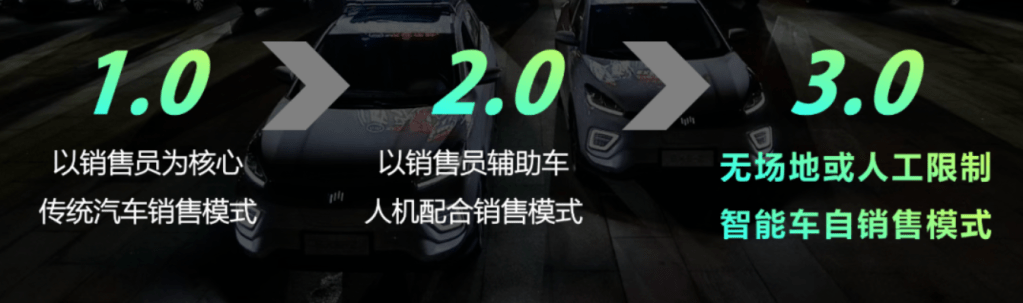
03 Unlocking the Evolution Formula of Intelligent Vehicle Services
- How do you attract passersby to not just notice the car but experience it—find it intriguing enough to step inside?
- How do you move potential users from just leaving their information to booking a test drive, turning fun interactions into purchases?
- In a fully autonomous setting, how can the product’s technical strengths be maximized? What tasks should the AI perform, and what should still involve humans?
- How do you guide your team to turn this vague vision into tangible, actionable scenarios?
04 Giving AI a Personality That Speaks

05 Co-Creating Personalized, Contextualized Services
- It initiates interaction, inviting you to get to know it:
- A Weltmeister car parked in your path flashes its hazard lights to say hi as you pass by.
- If you’re walking briskly, it hums an upbeat tune.
- If you stop to look closely, its slightly open door eagerly invites you to explore further.
- It thinks like a person:
- It interprets your mood from facial expressions, your personality from your gait, and your interests from your age. It captures insights hidden in clues, expressing itself with human-like emotional cues.
- It knows your preferred distance, desired temperature, and destination—and quietly aligns with your every action and thought.
- It has a personality and authenticity:
- It offers near-human interactions inside the car. Touching the door handle or tapping the steering wheel, you can feel its heartbeat, warmth, and rhythm.
- It can take on playful personas, bond with children, and display cheeky behaviors like sticking out its tongue or giving high fives.
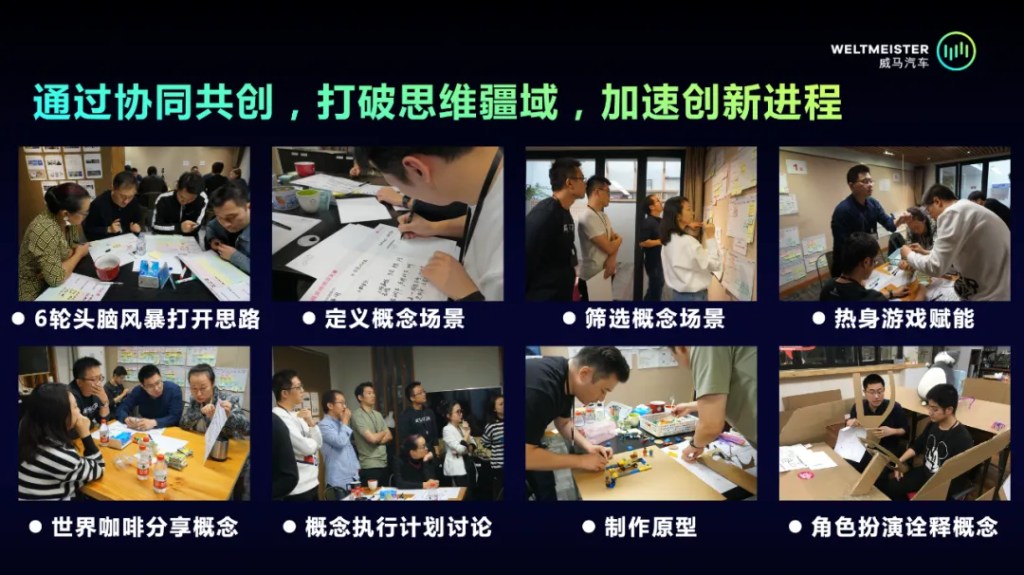
06 RoboTrial: Unlocking a New Service Paradigm
"One prototype equals 1,000 meetings."
- 1.0 Cardboard Prototype A quick co-creation process aligned the team and built confidence in the project. Simple cardboard prototypes vividly demonstrated human-vehicle interaction scenarios, fostering collective enthusiasm and creativity.
- 2.0 Garage Prototype Within four weeks, the team enabled cars to “sell themselves” through intelligent upgrades. The RoboTrial autonomous showroom underwent early experiments in a low-cost underground parking lot at a Shanghai tech hub and outdoor venues. These tests validated the model’s feasibility.
- 3.0 Mall Prototype Weltmeister conducted pop-up experiments with 15 upgraded RoboTrial cars in prime urban shopping districts in Shanghai and Beijing. Leveraging the post-pandemic "street economy" trend, these weekend and evening events attracted large crowds, gathering feedback and refining the autonomous sales model.

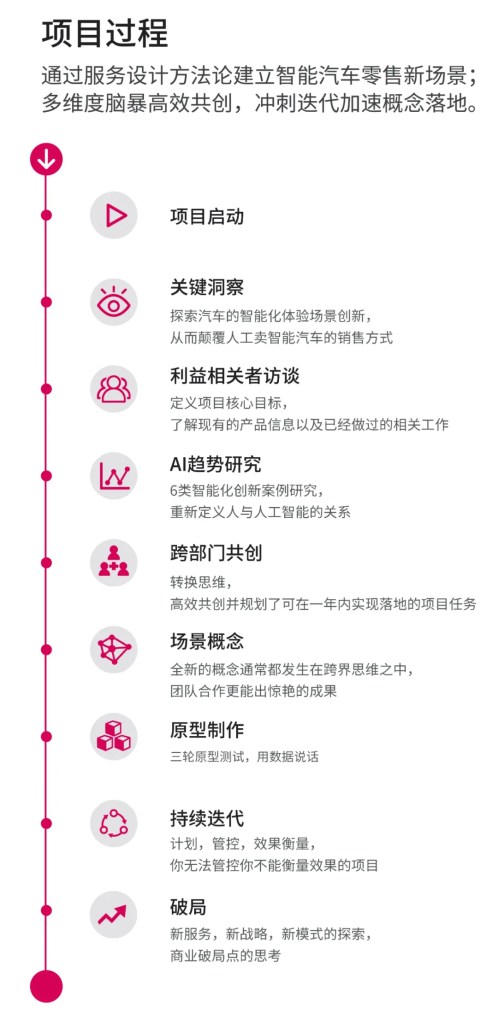
07 Disruptive Evolution of Automotive Marketing
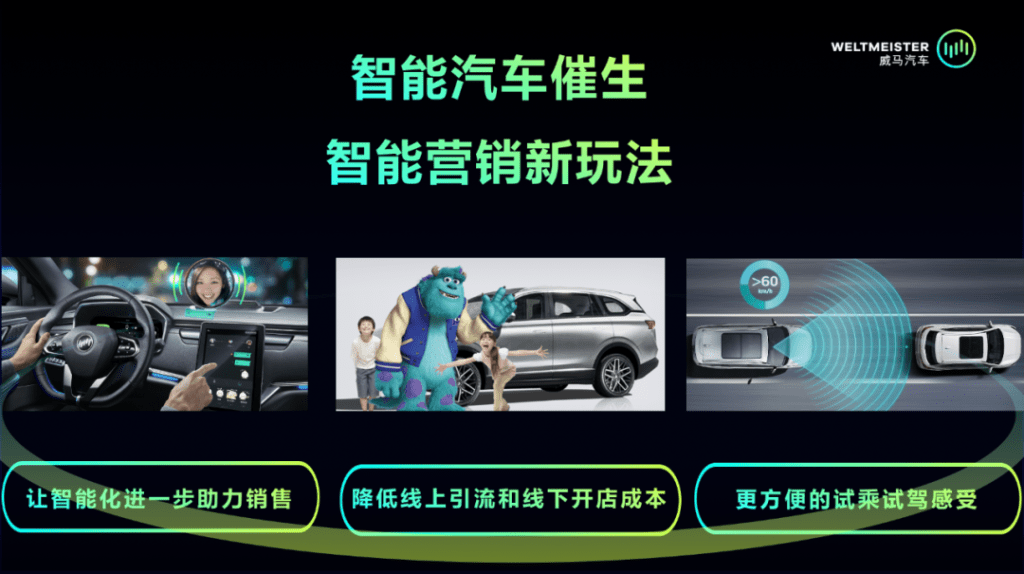
- Every car becomes a mobile showroom, significantly reducing online lead generation and offline store costs.
- Beyond eliminating costs like construction and rising rents, smart vehicles with autonomous sales capabilities ensure precise, replicable content delivery, lowering training expenses and enhancing test-drive and purchase experiences.
08 A Future-Driven Marketing Formula
Next steps include further enhancements to in-car voice capabilities, intelligent control, and thematic games to make user interactions even more engaging. RoboTrial will integrate AI-driven behavior sensing and autonomous driving features, turning cars into highly interactive, fun spaces. By gathering comparative data across different locations—such as user scale, lead efficiency, and test-drive conversions—RoboTrial can support decisions about physical store locations through intelligent modeling and resource optimization. In the future, RoboTrial might evolve into an independent service platform, redefining traditional “selling smart with people” to a new paradigm for intelligent vehicle sales. Weltmeister is pioneering intelligent marketing strategies that integrate digital infrastructure and drive the automotive industry’s next evolution.