Thirty years ago, the answer was obvious: reach the masses through traditional media and secure a place in consumers’ minds.
Fifteen years ago, the answer was equally clear: create outstanding products that customers genuinely love using.
Today, however, consumers are harder to impress, and product innovation is becoming increasingly challenging. So what does it take for customers to truly embrace a brand and build a lasting relationship with it?
01 | Building Service Capabilities: The Time Is Now
On April 8, China Bridge hosted the launch event “The Future Is All About Service” at our new studio. This exclusive, closed-door gathering brought together 20 industry leaders and decision-makers to witness the unveiling of our new portfolio of service offerings.
From this moment forward:
Great service is no longer a nice-to-have or a self-proclaimed advantage. It is a competitive moat that sets brands apart.
Service design is no longer an optional process tool. It is a strategic roadmap for navigating today’s business landscape.
From Awareness to Experience to Symbiosis
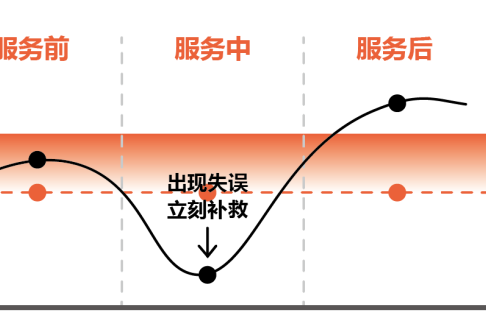
“Awareness brings familiarity. Experience builds trust. Symbiosis creates lasting relationships.”
In the past, customers chose brands based on what they heard, making communication the primary focus of brand building.
Later, customers chose brands based on how well products performed, driving companies to create exceptional products.
Today, customers increasingly seek symbiotic relationships with brands, making service a critical driver of long-term loyalty.
Originally a biological concept, symbiosis describes a mutually beneficial relationship in which different organisms develop interdependence through sustained interaction.
In today’s business context, great service transforms the brand-customer relationship from transactions into symbiosis. Through continuous value exchange and emotional connection, brands and customers develop dynamic relationships built on mutual growth.
In an increasingly competitive market, businesses must turn service capabilities into symbiotic capabilities to achieve sustainable, long-term success.

02 好服务是设计出来的
Over the past two decades, China Bridge has helped numerous organizations enhance their service capabilities across different business dimensions. Along the way, we have encountered a wide range of service-related challenges.
When these challenges are examined across two dimensions—single versus multiple customer journeys and operational management versus customer acquisition—they generally fall into four categories:
- Lack of customer journeys: Without innovative end-to-end customer journeys, new business models struggle to become reality.
- Lack of service systems: Without a structured service system, great service is difficult to articulate, invisible to customers, inconsistent in delivery, and rarely recognized by the wider industry.
- Lack of signature experiences: Without memorable service highlights, customer experiences remain ordinary and fail to make a lasting impression.
- Lack of integrated strategies: Without a holistic approach, marketing initiatives become fragmented and disconnected.

Drawing on more than a decade of experience working with leading enterprises, we identified four fundamental service challenges—and the opportunities to address them.
To help businesses overcome these challenges, China Bridge has developed four new service offerings: New Service Model, New Service System, New Service Experience, and New Service Marketing.
The following business cases demonstrate how these solutions create mutual value and foster lasting relationships across industries and customer scenarios.
New Service Model
Business models define the vision. Service models bring it to life.
Core Challenge: No Customer Journey
Many companies develop innovative business models powered by emerging technologies and new customer needs. However, while their target audiences and customer journeys have changed, their internal structures and service delivery processes often remain unchanged.
The result? Promising business concepts that fail to translate into compelling customer experiences.
China Bridge helps organizations design entirely new end-to-end customer journeys, from concept to implementation. By defining new service models at the organizational level, we turn business model innovation into actionable service experiences.
Case Study | ZEEKR — Electric Vehicles
Symbiotic Approach: ZEEKR introduced a trendy, playful service model that moves beyond traditional automotive service conventions. By designing a complete end-to-end customer journey from scratch, the brand created new opportunities for deeper customer engagement.
Customer Value: Personalized vehicle delivery ceremonies and thoughtfully designed service experiences fulfill customers’ expectations for convenience, enjoyment, and individuality.
Symbiotic Mechanism: Dealers become co-creators of the customer experience rather than simply service executors. Through direct participation and continuous customer feedback, they help refine service delivery and strengthen customer engagement.
Impact: Moving beyond the competition between Tesla’s minimal-service approach and NIO’s comprehensive-service model, ZEEKR redefined service around the quality of customer experiences rather than the quantity of services provided.
The new service model not only mapped the complete customer journey but also broke it down into manageable micro-journeys, each with dedicated ownership.
As a result, the customer journey map evolved into a practical operational roadmap for the organization.
New Service System
Make great service visible, communicable, deliverable, and recognizable.
Core Challenge: No Service System
As traditional businesses evolve, their service offerings often become increasingly extensive—but also increasingly fragmented.
What truly differentiates their services from competitors? Which innovations should become standard practices? How should these services be communicated externally and replicated internally? Most importantly, how can continuous service innovation be sustained?
China Bridge develops structured service systems based on each organization’s brand identity, customer characteristics, and competitive landscape.
By transforming service into a recognizable brand asset, businesses can strengthen their market positioning, standardize internal delivery, and scale successful practices across their organizations.
Case Study | Jinmao — Premium Property Management
Symbiotic Approach: Jinmao’s MOCO (Moments of Connection) service system places connection at the heart of the customer experience. Through services spanning the entire value chain, it supports residents throughout different stages of life and creates meaningful moments within the community.
Customer Value: The service system introduces distinctive premium experiences, including:
- 4S Home Care: Comprehensive property maintenance throughout the home’s lifecycle.
- Four Seasons Museum: Seasonal community gatherings and themed activities.
- Four-Neighbor Culture: Community experiences that foster cultural identity and social connections.
Symbiotic Mechanism: The Four-Color Butler system offers four distinct service styles—Efficiency, Enthusiasm, Intelligence, and Artistry—allowing residents to select the service professional who best suits their preferences.
A performance-based incentive mechanism rewards highly selected service professionals, improving employee motivation while enhancing residents’ service experiences.
Impact: The new service system enhanced residents’ quality of life and strengthened their connection with the brand.
It also enabled bottom-up innovation, replacing fragmented and difficult-to-scale service initiatives with a structured, replicable approach.
New Service Experience
One remarkable moment can create a lasting impression.
Core Challenge: No Memorable Highlights
In many service scenarios, businesses simply follow competitors or respond to customer demands.
Without distinctive service innovations, they struggle to deliver memorable experiences that set new industry standards.
China Bridge identifies the essential experience goals within specific customer scenarios and designs signature WOW moments that leave lasting impressions.
Case Study | ASUS ROG — Gaming Retail Experience
Symbiotic Approach: ASUS ROG reimagined conventional retail services by creating an experience rooted in gaming culture.
Beyond product demonstrations, personalized services and emotional engagement transform retail stores into destinations for passionate gamers.
Customer Value: A signature power-on ceremony turns product collection into a memorable moment of achievement, making customers feel as though they have received a prized piece of gaming equipment.
The store also creates opportunities for players to exchange ideas, explore gaming culture, and connect with the broader ROG community.
Symbiotic Mechanism: Through experiences such as the power-on ceremony and transparent PC-building areas, customers can enjoy hands-on customization, interact with store specialists, and celebrate the activation of gaming equipment associated with professional esports champions.
Impact: The redesigned retail experience transformed stores from sales outlets into immersive brand culture destinations.
This strengthened customer loyalty, encouraged community engagement, and generated organic word-of-mouth advocacy.
New Service Marketing
Lasting relationships are built through ongoing connections.
Core Challenge: No Integrated Engagement Strategy
As relationships between brands and customers continue to evolve, businesses face a fundamental question:
How can they build lasting, mutually beneficial relationships that encourage co-creation and shared growth?
China Bridge develops integrated marketing and operational strategies, including customer engagement programs and membership systems, tailored to specific customer groups and industry characteristics.
These solutions help businesses establish a more coherent and effective approach to ongoing customer engagement.
Case Study | Shanghai Sea World — Waterfront Commercial Complex
Symbiotic Approach: By integrating the leisure needs of diverse customer groups, China Bridge positioned the development around the concept of “Salt-Inspired Micro-Getaways.”
This distinctive experience concept creates layered, engaging leisure scenarios that encourage visitors to return and discover something new each time.
Customer Value: Customized experiences were developed for families, urban explorers, and waterfront visitors, including:
- Sea Passports and Sailor Days for children.
- Cycling-friendly maps and routes for urban adventurers.
- Trendy leisure, entertainment, and waterfront activities that attract visitors from across the city.
Symbiotic Mechanism: The “48 Hours by the Sea” service concept allows visitors to combine experiences across retail, hospitality, and residential offerings.
Integrated packages encourage visitors to extend their stays, transforming short-term foot traffic into sustained engagement.
Through online activities and social sharing, visitors also contribute to service improvement while becoming loyal customers and brand advocates.
Impact: By integrating the development’s cruise-inspired identity with local Wusong and maritime culture, the project strengthened its regional brand awareness and influence.
Cultural events, innovative service experiences, and themed marketing campaigns created a distinctive competitive advantage that would be difficult to replicate.
What These Cases Have in Common
Across all four cases, three principles emerge:
- Customers are not merely consumers; they are co-creators of service experiences.
- Service design creates opportunities and mechanisms for customer participation and co-creation.
- Lasting symbiotic relationships are built on both operational data and emotional connections.
To develop sustainable customer relationships, brands must embed mechanisms for mutual value creation directly into their services, allowing continuous exchanges of value to emerge naturally.
Value-Added Services | From Great Service to Great Service DNA
For businesses, the greatest challenge is not delivering great service once, but delivering it consistently over time.
That is why China Bridge goes beyond designing service solutions. We also help organizations develop the internal capabilities to sustain them.
In addition to our four core service offerings, we have introduced three value-added services to help businesses move from delivering great service to embedding great service into their organizational DNA.

03 | Our Proprietary Methodology
The CBI Service Design Model: Define → Deliver → Iterate
Through years of research, experimentation, and practical application, China Bridge has developed its proprietary CBI Service Innovation Model, a core methodology for building organizational service capabilities.
Creating strong service capabilities requires more than considering the Customer (C), Brand (B), and Internal Organization (I) independently.
These three dimensions form an interconnected system.
The CBI model brings them together through three essential steps:
Define: Connect customer needs with the brand’s unique strengths to define a distinctive service proposition. This is expressed through a service brand strategy.
Deliver: Align customer needs with organizational responsibilities to bring the service promise to life. This is translated into service blueprints and service blue books.
Iterate: Combine the brand’s unique strengths with organizational capabilities to continuously improve and develop service excellence. This is supported by innovation mechanisms and talent development.
Together, these three steps transform service design from an isolated initiative into an integrated organizational capability.

04 | Behind Service Challenges Lies a Leadership Mindset
Throughout two decades of innovation consulting, we have heard countless organizations describe the challenges they face in service development.
We have summarized some of the most common challenges below.
If any of these sound familiar, perhaps your organization is still trying to navigate a service-driven future with an outdated roadmap built primarily around brands and products.
If so, it’s time to talk to China Bridge.
Common Service Challenges:
- We provide basic services but lack distinctive service highlights.
- We occasionally deliver great service, but cannot sustain or clearly articulate it.
- Our services are fragmented, without a systematic or standardized approach.
- We confuse business customers (B) with end users (C) when designing services.
- Our partners—including dealers, service providers, franchisees, and retail stores—operate independently, often competing rather than collaborating, resulting in inconsistent customer experiences.
- We have traditionally focused on selling products, but without service and systems thinking, we risk being integrated into someone else’s ecosystem.
- We have customers, but do not know how to engage them effectively. Our engagement activities feel too sales-driven, discouraging participation.
- We struggle to identify what services to design or how to integrate resources to bring them to life.
- New business models require both products and services, but our product capabilities have advanced far beyond our service capabilities.
Or come visit China Bridge’s new home.
Step into a space where nature and creativity come together.
Ascend the stairs into an atmosphere of possibility. Open the windows to lush greenery, with garden views bringing nature into the workspace.
Here, you can enjoy moments of quiet reflection or engage in inspiring conversations. Ideas emerge as naturally and unexpectedly as a breeze through the trees.
Located near Zhongshan Park in Shanghai, China Bridge’s new Service Design Studio will continue hosting exclusive, in-person gatherings where industry leaders can explore and co-create new roadmaps for service innovation.
If you identify with any of the following roles, we warmly invite you to contact Xiao Qiao and reserve a place at our upcoming sessions:
✓ Business decision-makers seeking to transform transactional customer relationships into lasting, mutually beneficial partnerships.
✓ Strategic planners looking to break beyond conventional service models.
✓ Brand and customer experience leaders struggling with fragmented service innovation.
✓ Marketing and growth leaders seeking to create more memorable and differentiated customer experiences.
Discover more from 桥中CBi China Bridge
Subscribe to get the latest posts sent to your email.