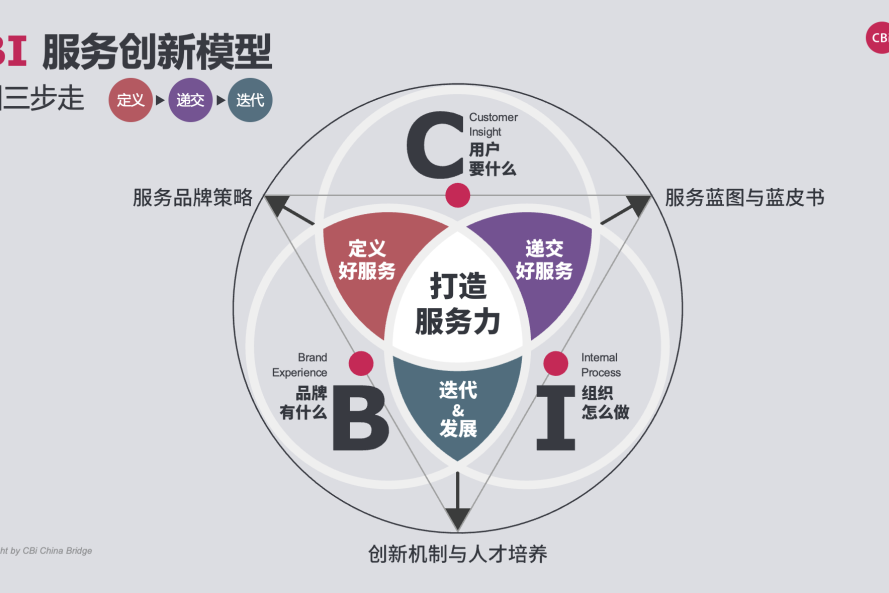
In today’s highly competitive market, delivering great service is more than a competitive advantage. It is the foundation for building lasting relationships with customers.
Why do some companies create service experiences that truly resonate with people, while others are quickly forgotten?
To answer this question, we have identified and distilled the 10 Principles of Great Service.
These principles help businesses recognize and strengthen their unique service DNA, design service experiences that reflect their brand identity, and create unforgettable moments for their customers.
Principle 1: Understand Customer Habits
Many people assume that understanding what customers want is relatively straightforward.
But I’d like to share a real story from our collaboration with a nonprofit organization providing cataract treatment in rural China. It may change how you think about customer needs.
Cataracts are the leading cause of blindness worldwide, yet treatment is relatively straightforward. With a simple surgical procedure, most patients can regain their vision.
It might seem reasonable to assume that patients simply want efficient arrangements, a quick recovery, and an early discharge from the hospital.
But is that really all they need?
One particularly memorable conversation was with a man in his seventies. He spoke little Mandarin and was clearly cautious about our intentions. He asked a younger person to translate his question:
“How can you guarantee that this surgery will restore my sight?”
Gradually, we realized that the greatest challenge was not the medical treatment itself.
The real challenge was breaking down an invisible barrier—rebuilding trust, addressing patients’ concerns, and helping them feel confident enough to take the first step.
To overcome this barrier, we changed our approach and adopted a more thoughtful, people-centered strategy.
We visited households in advance, adjusted screening schedules and routes to avoid busy farming periods, and clearly communicated transportation arrangements.
We even positioned mobile screening vehicles along routes that older residents regularly traveled.
As a result, the screening vehicles were no longer unfamiliar objects parked at the village entrance, easily ignored amid the demands of daily life. They became convenient stops along familiar journeys.
We also invited patients who had successfully undergone surgery to share their experiences in their own words.
“After the surgery, I can take care of my grandson again.”
These personal stories from fellow villagers proved far more persuasive than generic promotional messages. They helped patients overcome their fears and develop trust in the treatment.
After six months of continuous improvement, local screening and surgery rates nearly doubled.
More importantly, trust continued to grow among patients and their families, and the treatment helped transform lives.

This research experience reinforced the first step in designing great service: understanding who your customers really are.
Different services serve different audiences, depending on their positioning and purpose.
And different customers have different behaviors, psychological needs, and habits—all of which directly influence how services should be designed and delivered.
Principle 2: Manage Customer Expectations
Horst Schulze, co-founder of The Ritz-Carlton Hotel Company, identified an important insight after analyzing thousands of pieces of customer feedback.
Across virtually every service industry, customers share three fundamental expectations.
First, products and services should be free from defects and errors.
Second, service should be timely and efficient.
Third, the overall experience should be friendly and pleasant.
These expectations may sound simple, but they form the foundation of great service.
Yet a question remains: what happens when a business cannot meet all three?
After all, even robots programmed to follow precise instructions cannot guarantee completely error-free performance, let alone human employees.
Does every service failure inevitably lead to dissatisfaction?
Not necessarily.
Sometimes, what affects the customer experience most is not the mistake itself, but how well expectations are managed.
Is a service failure always a bad thing?
Some researchers have proposed an interesting idea: when a service problem occurs, customers may actually become more satisfied than those who have never experienced a problem—provided the company responds quickly and resolves the issue effectively.
This phenomenon is often discussed in relation to the concept of service recovery.
Effective service recovery can do more than repair a negative experience. It can create unexpected moments of reassurance and strengthen customer trust.
Great service is not about eliminating every possible problem. It is about responding appropriately when problems arise.
Mistakes are sometimes unavoidable. But when a company responds with sincerity, accountability, and genuine care, customers feel respected and valued.
Even if the original problem cannot be perfectly reversed, the overall experience may become more positive.
Service recovery is not merely a way to fix mistakes. It is an opportunity to build deeper trust.
Often, customers care less about whether a company has ever made a mistake than about whether they are genuinely cared for when something goes wrong.

Principle 3: Make Services Easy to Access
One day, a colleague and I were having lunch at a restaurant.
After sitting down, I noticed a bright blue Alipay tap-to-order sticker attached to the corner of our table.
Curious, I tapped the back of my phone against the blue circular area.
To my surprise, my phone immediately opened the restaurant’s mini-program. Within moments, I had selected my dishes and completed the payment.
The entire process was almost effortless.
By the time I put down my phone, my colleague was still opening the Alipay app.
I jokingly said:
“This is perfect for those holiday dinners when everyone fights over who gets to pay the bill. Whoever taps first wins!”
The design itself was not particularly complicated. But it addressed three essential customer needs: intuitiveness, ease of use, and efficiency.
Once customers become aware of your service, the next step is getting them to engage with it.
Think of it like meeting someone for the first time.
If someone seems approachable and easy to get along with, you naturally want to spend more time with them.
But if they initially appear distant, complicated, or difficult to approach, even their most attractive qualities may go unnoticed.
The same principle applies to service experiences. Whether customers can understand and use a service from their very first interaction can determine its success or failure.

Principle 4: Design for Diverse Users
Great service is not simply about meeting the needs of the majority. It is also about recognizing people whose needs are often overlooked.
These users may include older adults with limited mobility, people with visual impairments who rely on Braille guidance, immigrants unfamiliar with local languages and cultures, or individuals with limited incomes who cannot afford premium services.
In recent years, Inclusive Design has gained increasing attention among leading technology companies in Silicon Valley.
As Susan Goltsman, a design leader associated with Microsoft’s inclusive design work, explained:
“Inclusive design doesn’t mean you’re designing one thing for all people. You’re designing a diversity of ways for everyone to participate in an experience with a sense of belonging.”
Japan has long been regarded as a global leader in accessible design.
In many Japanese subway stations, elevator controls are positioned at heights suitable for wheelchair users, with Braille labels and audio guidance.
Buses feature accessible ramps that allow older adults with limited mobility and parents with strollers to board more easily.
Even some libraries consider wheelchair accessibility when determining the height and spacing of bookshelves.
These details are not simply about accommodating particular groups.
They reflect a commitment to leaving no one behind.
Great service does more than make something usable. It allows people to experience the quiet, thoughtful care embedded in its design.
That is where the human warmth of service truly comes from.
Principle 5: Communicate Service Value Clearly
One common mistake in service design is assuming that customers will automatically recognize the value of a service simply because the company has invested in providing it.
Businesses may deliver genuinely valuable services but fail to communicate why those services matter.
As a result, even thoughtful services can be perceived as unnecessary or insignificant.
Great service must clearly demonstrate the practical benefits customers receive.
Consider someone who has used a health management app for an entire month.
If all they see is an increasing collection of data, without any meaningful sense of improvement, they may eventually stop using it.
But imagine if the app provided timely feedback that helped users recognize their progress:
“Congratulations! After 21 days of consistency, your average daily step count has increased by 20%. You’re building greater stamina!”
“Your deep sleep duration has increased by 30% compared with last month. Are you feeling more refreshed?”
“Over the past month, you’ve reduced your sugar intake by XX%. Keep it up—your skin may benefit too!”
These messages help transform abstract data into meaningful personal progress.
The long-term success of a service does not depend on how impressive or sophisticated its touchpoints appear. It depends on whether customers recognize its value and find it worth continuing to use.
When customers can clearly see the benefits, they have a compelling reason to stay.
Principle 6: Deliver Consistent Service
A colleague once purchased a technical jacket from Arc’teryx.
One day, while eating, he accidentally got oil stains on it.
Because technical outdoor garments require specialized care, he was concerned that improper washing might damage the fabric’s protective coating.
He was hesitant to clean it himself, but also worried about paying for an ordinary dry-cleaning service that might not handle the garment properly.
Then he discovered that his Arc’teryx GAMMA membership included a garment cleaning service.
Without hesitation, he booked an appointment at the nearest store.
Less than a week later, his jacket was returned.
When he opened the package, he was astonished.
For a moment, he wondered whether the company had sent him a brand-new jacket.
The garment arrived in a sleek black box featuring the Arc’teryx logo.
Inside, the jacket had been carefully folded and placed in a protective dust bag. It looked almost as clean as the day he bought it.
The package also included a garment care receipt card with a thoughtful message:
“Thank you for entrusting your product to our care.”
It was a small detail, but one that added a sense of ceremony and genuine consideration.
My colleague laughed and said:
“I used to think Arc’teryx was a little expensive. But after this after-sales experience, I finally feel that the money was worth it!”
Arc’teryx had demonstrated that its commitment to quality extended beyond its products to the entire service experience.
For customers, almost every company makes promises before a purchase.
But only a few continue to demonstrate the same level of commitment after the transaction is complete.
Thoughtful, consistent after-sales service not only reinforces the original purchase decision but also creates opportunities for repeat business and deeper customer relationships.
Principle 7: Get the Service Rhythm Right
When people are repeatedly exposed to the same stimuli, delivered in the same way, at the same intensity and frequency, their responses gradually weaken.
Over time, they may even become tired or disengaged.
Service experiences work in much the same way.
Filling every moment of the customer journey with additional steps, features, and highlights can overwhelm customers rather than delight them.
It can also reduce opportunities for natural interactions between people and between customers and their surroundings.
Consider the shopping experience at MINISO.
Unlike many traditional retailers, MINISO generally does not rely on sales assistants actively approaching customers and recommending products.
Instead, customers can browse freely and enjoy a relaxed, self-directed shopping experience.
Some people might wonder: why doesn’t MINISO use more sales assistants? Can this approach really work?
The logic is surprisingly simple.
Most MINISO products are familiar everyday items with transparent pricing. Customers typically do not need detailed explanations or demonstrations to understand what they are buying.
As a result, the company does not need to rely heavily on sales-driven interactions.
This approach gives customers greater autonomy and freedom while also helping the business reduce operational costs.
Sometimes, designing a better service means knowing when to step back.
Principle 8: Take Ownership and Follow Through
To make customers genuinely feel the sincerity behind a service, businesses must shift employees’ mindsets from “I have to do this” to “I want to do this.”
Great service goes beyond following established procedures.
It requires genuine thoughtfulness, initiative, and a willingness to act proactively rather than simply respond to requests.
A classic story involving FedEx in the United States offers an illustration.
A woman once contacted a delivery employee in distress.
She was getting married the following day, but her wedding dress had been delayed in Florida.
She explained anxiously:
“My dress was supposed to arrive by noon. It’s already three in the afternoon, and I’m getting married tomorrow. Can you help me?”
Instead of simply saying that nothing could be done, the employee took extraordinary action.
He arranged to charter an aircraft and hire a pilot to fly the package directly to the woman’s town.
Chartering a plane to deliver a wedding dress may sound unbelievable.
Yet according to this story, it was precisely this sense of initiative and responsibility that won the trust and appreciation of the customer and the local community, helping FedEx establish a stronger presence in the area.
A proactive service mindset does more than solve immediate problems. It creates memorable experiences, strengthens reputation, and builds customer loyalty.
Principle 9: Make Service Everyone’s Responsibility
A business consultant, after working with dozens of underperforming companies, identified two particularly troubling patterns in how employees spoke.
The first was the frequent use of “they.”
“They messed it up.”
“They don’t understand.”
The second was the repeated phrase:
“That’s not my responsibility.”
In other words: “This has nothing to do with me. Don’t come to me.”
Both patterns reveal a dangerous organizational mindset.
Employees begin to see customer needs as someone else’s problem, assuming that another department or colleague will eventually take care of them.
But great service begins with an attitude of “I’ll take responsibility,” rather than “I’ll pass it on to someone else.”
An organization’s ultimate goal is not merely to complete its service procedures.
It is to create experiences that make customers want to return and continue choosing the brand.
That means customer problems should never simply be pushed aside.
Even employees whose roles do not involve direct customer contact should develop a strong service mindset.
When a customer needs help, the person they encounter should be ready to take responsibility for helping them move toward a solution.
Great service is not the responsibility of a single department.
It is a shared commitment across the entire organization.
Principle 10: Simplify with Purpose
In recent years, many businesses have become increasingly focused on reducing costs and improving efficiency.
Unfortunately, some have interpreted this objective too narrowly.
Their efforts often focus on eliminating visible expenses.
For example, replacing individual toilet paper rolls in restroom stalls with a single shared roll near the entrance.
Or removing complimentary takeaway bags from company cafeterias.
Or switching from a premium courier service to a cheaper delivery provider.
These decisions may reduce immediate costs.
But when cost reduction becomes nothing more than indiscriminate cutting, the consequences can outweigh the savings—and even undermine the company’s fundamental service capabilities and customer experience.
Consider self-checkout systems, which are becoming increasingly common in restaurants and supermarkets.
Customers must scan items individually, sometimes accidentally missing an item or encountering technical errors.
Instead of saving time, this form of automation can create additional frustration.
Now consider UNIQLO’s self-checkout experience.
Customers simply place all their purchases into a checkout bin.
The system automatically identifies the products, calculates the total, and generates the bill.
The entire process feels almost as though someone has pressed a fast-forward button.
Everything happens effortlessly.
True innovation makes change feel natural and meaningful.
By respecting the customer experience while designing better ways to deliver value, businesses can achieve both commercial efficiency and genuine human-centered service.
Conclusion
Building a culture of service excellence requires businesses to continuously learn, adapt, and innovate.
This is not only essential for survival. It is also the foundation of long-term competitiveness.
Only by continuously reinventing themselves and responding flexibly to change can businesses stand out in an increasingly competitive marketplace.
By understanding people, designing meaningful experiences, and continuously improving how value is delivered, every organization has the opportunity to discover its own path to great service.
Discover more from 桥中CBi China Bridge
Subscribe to get the latest posts sent to your email.