


Simple Love’s Three Pillars:
Big Trends, Grand Vision, and Extreme Innovation.
“And nothing else.”
What does “extreme innovation” mean for Simple Love?
In a product-first world, why has Simple Love Yogurt chosen to embrace service design?
Simple Love’s co-founder Liu Ruizhi joined mid-to-senior managers from R&D, offline sales, supply chain, branding, product development, and online operations at CBi China Bridge. Together, they applied service design methodologies to co-create and unlock valuable results.
Service design is a systematic approach born for the post-product era. It helps businesses holistically re-examine their products, brands, business models, and operational processes, leading to enhanced or redefined user experiences.
01 What Is Service Design?
- How do we create a seamless, rhythmic purchasing experience?
- How do we educate users while selling products?
- How do we establish emotional connections between products and users?
- How do we integrate products into the various scenarios of our target users’ lives?
CBi China Bridge’s unique service design model combines its proprietary CBI framework with a signature “learn-and-do” training approach, integrating systematic methodologies with real-world challenges. This process uses projects to drive learning and learning to promote practical implementation.
 02 What We Think vs. What Users Think
 02 What We Think vs. What Users Think
“If we don’t know how our online UV (unique visitors) is generated, who our users are, or what they need, it only proves we don’t truly understand them.”
The Customer Insights Module employs methods such as user diaries and immersive observations to develop user personas. This helps the team identify and align on user needs, delight points, and pain points, transforming “what we think” into “what users think.”

03 Selling Products vs. Selling Experiences

(From tangible to intangible.)
04 A One-Time Boost vs. A Growth Engine
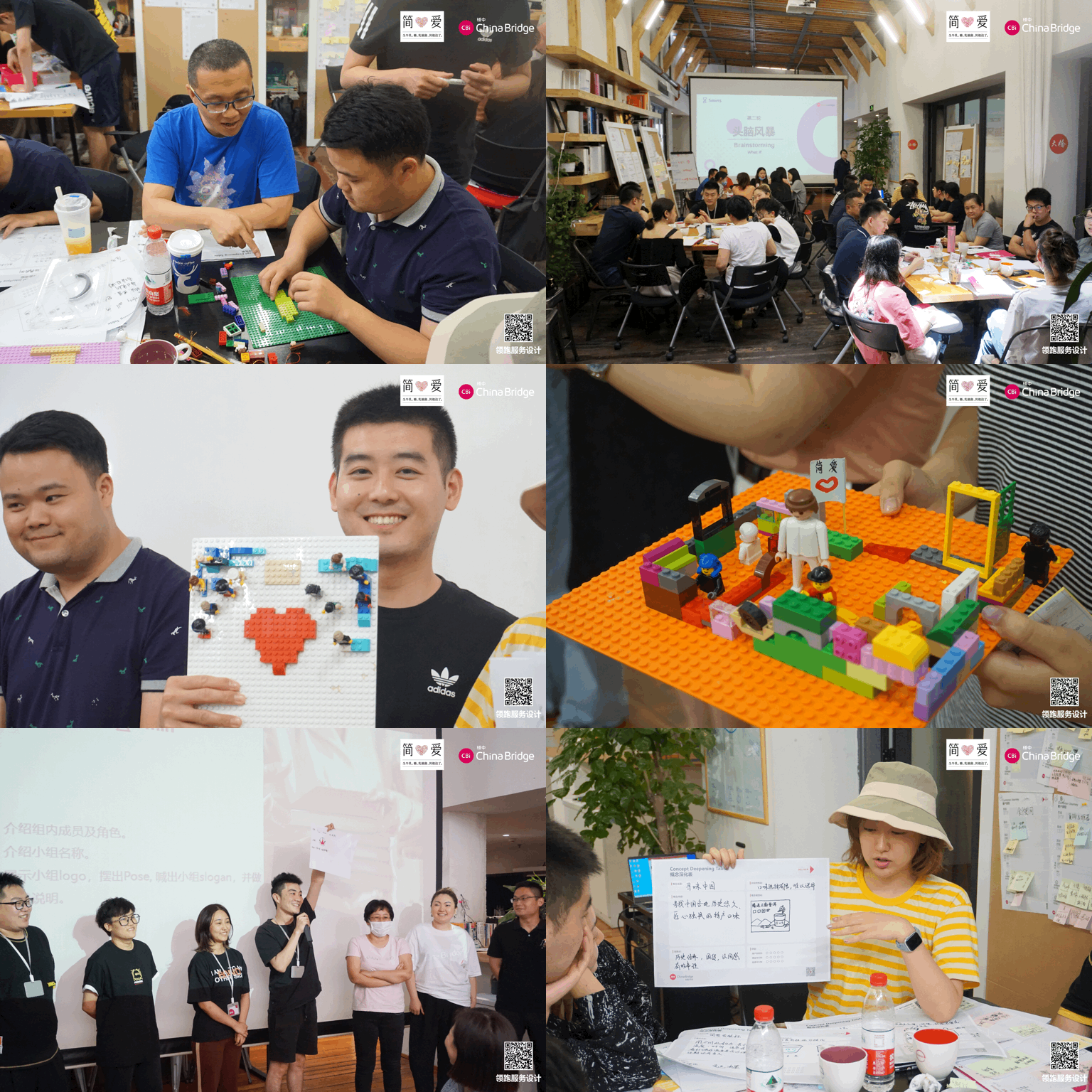
(Photo: Co-creation in action.)
“Exciting!” “Worth it!”
“Eye-opening.” “Enlightening.”
“Unforgettable.” “Beyond expectations!”Liu Ruizhi, Simple Love’s co-founder and General Manager of the Marketing Center, shared:
“Over these two days, I’ve seen at least five concepts that we can immediately implement when we return. At the same time, I’ve been reflecting: with the same people and the same challenges, why couldn’t we solve these problems in the office after so long, yet here, we solved them today? Why?”


