- It has supported 35 Nobel Prize-winning scientists in their achievements.
- Its products are featured on Canada’s $100 banknote.
- It captured the majestic view of the moon during humanity’s first lunar landing.
- Its founder’s scientific theories laid the foundation for all high-performance optics.
This legendary company is none other than Carl Zeiss.



01 In the Post-Product Era, Service is King
- Service is a competitive advantage, essential for a company’s success.
- Great service doesn’t happen by accident—it needs to be designed.
- Service design opens new doors to innovation.
In November of the same year, Zeiss Vision Care officially partnered with CBi China Bridge, launching a Service Design Organizational Empowerment Program.
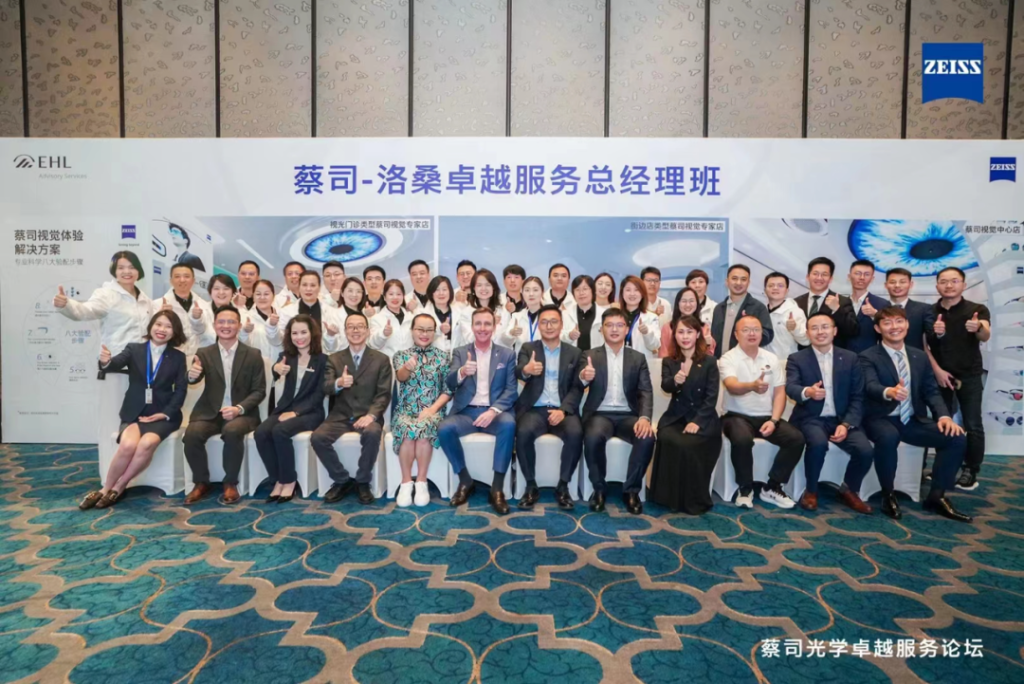

“Through learning service design, I’ve come to deeply understand its importance in achieving a company’s vision. This is my second time studying service design at CBi, and each time feels like a revelation. I’m eager to bring these tools and methods back to my team to enhance our service experience.”
— Charles, Zeiss Vision Care
“As a B2B2C company, service design allows us to help our clients create unique service experiences, meet consumer needs, and enhance brand value chains. Internally, it fosters team consensus, addresses employee needs, and sparks creativity. Service design is not just a business tool; it’s a powerful management instrument that gives Zeiss a competitive edge in the market.”
— Wendy, Zeiss Vision Care
02 Teaching a Company to Fish
As a B2B2C company, Zeiss Vision Care recognizes that service design can impact both its internal systems and external distribution network. By helping its partners develop “Zeiss-quality service,” the company is building a new business model and completing its commercial ecosystem.
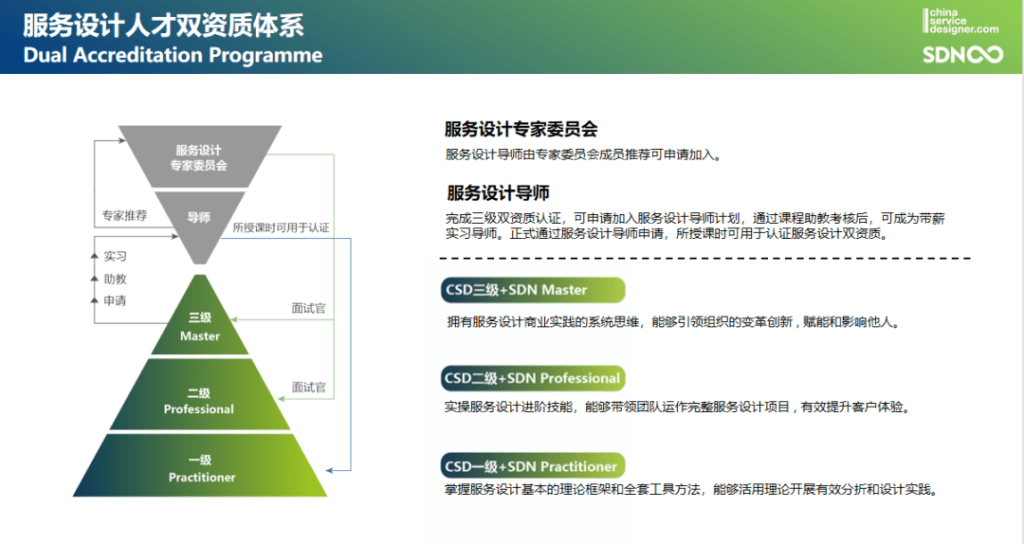
The dual service design qualifications program has allowed Zeiss to:
- Identify and nurture internal talent rapidly;
- Establish a scalable methodological framework;
- Enable sustainable organizational renewal.
03 Marrying Legendary Products with Premier Service
Zeiss is not alone. Other global manufacturing leaders, including Huawei, Haier, and Bosch, are also adopting service design.
Why are Manufacturing Giants Embracing Service Design?
- Shift Perspectives, Find New Directions
The product era focused on technology, channels, and cost. The service era revolves around users, users, users. Service design helps companies rethink operations from the user’s perspective, redesign service touchpoints, and identify new growth opportunities. - Facilitate Transformation, Achieve Breakthroughs
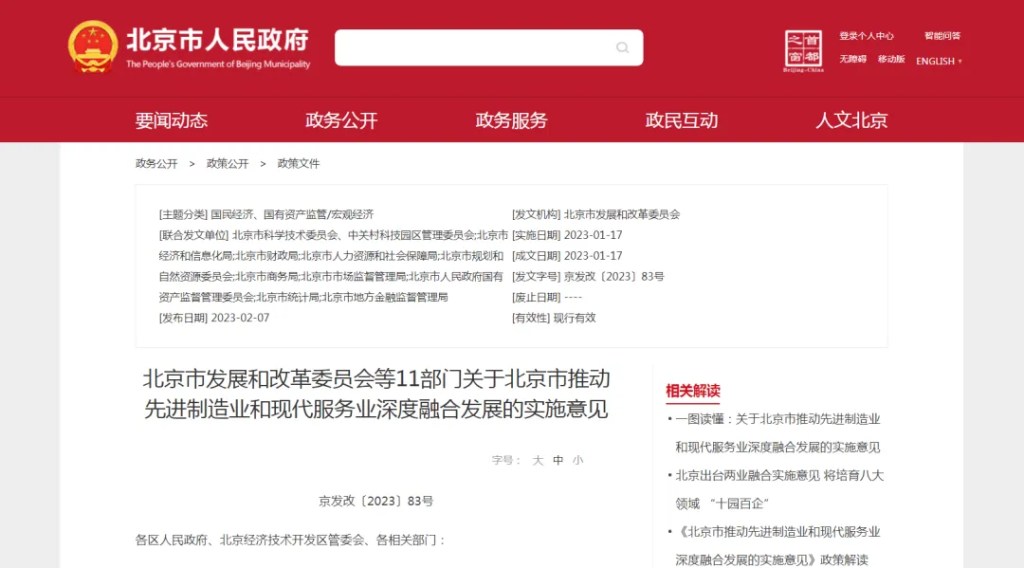
By 2015, the GDP share of China’s service sector had surpassed manufacturing. After 40 years of rapid industrial growth, the integration of manufacturing and services became inevitable. Companies like Carl Zeiss, Bosch, Huawei, and Haier have already started building service-oriented talent pools, preparing for this shift. - Break Boundaries, Encourage Collaboration
Transitioning from products to services requires breaking down boundaries—whether they are between disciplines, departments, or industries. Service design provides a holistic, top-down approach, enabling cross-functional collaboration and fostering a unified organizational language.
04 From Products to Services: Think Bigger
What about your organization? Are you preparing for the service economy by empowering your teams with service design capabilities? Now is the time to act!