Every major technological breakthrough reshapes industries and changes the way products and services are designed.
Today, the rapid advancement of AI and other emerging technologies has once again brought industries to a critical turning point for innovation.
Yet technological breakthroughs do not necessarily translate into successful products.
Technology-driven intelligent products and services are emerging everywhere, but many still fall short of meeting real human needs.
For example, AI-powered elderly care platforms may collect extensive user data while overlooking older adults’ privacy concerns. Smart home appliances operated through complex voice commands may end up creating more barriers than convenience.
At the heart of these challenges lies a fundamental issue: innovation often overlooks a deep understanding of people.
The faster technology advances, the more innovation needs the insights of anthropology.
Forum Launch: Establishing the Design Anthropology Committee and Advancing Cross-Disciplinary Collaboration
A growing number of industry innovators have recognized this challenge.
Through collaborative efforts across multiple organizations, the Shanghai Anthropological Society established its Design Anthropology Committee to promote the integration of anthropological research methods with design, products, and services, creating a platform for dialogue between academia and industry.
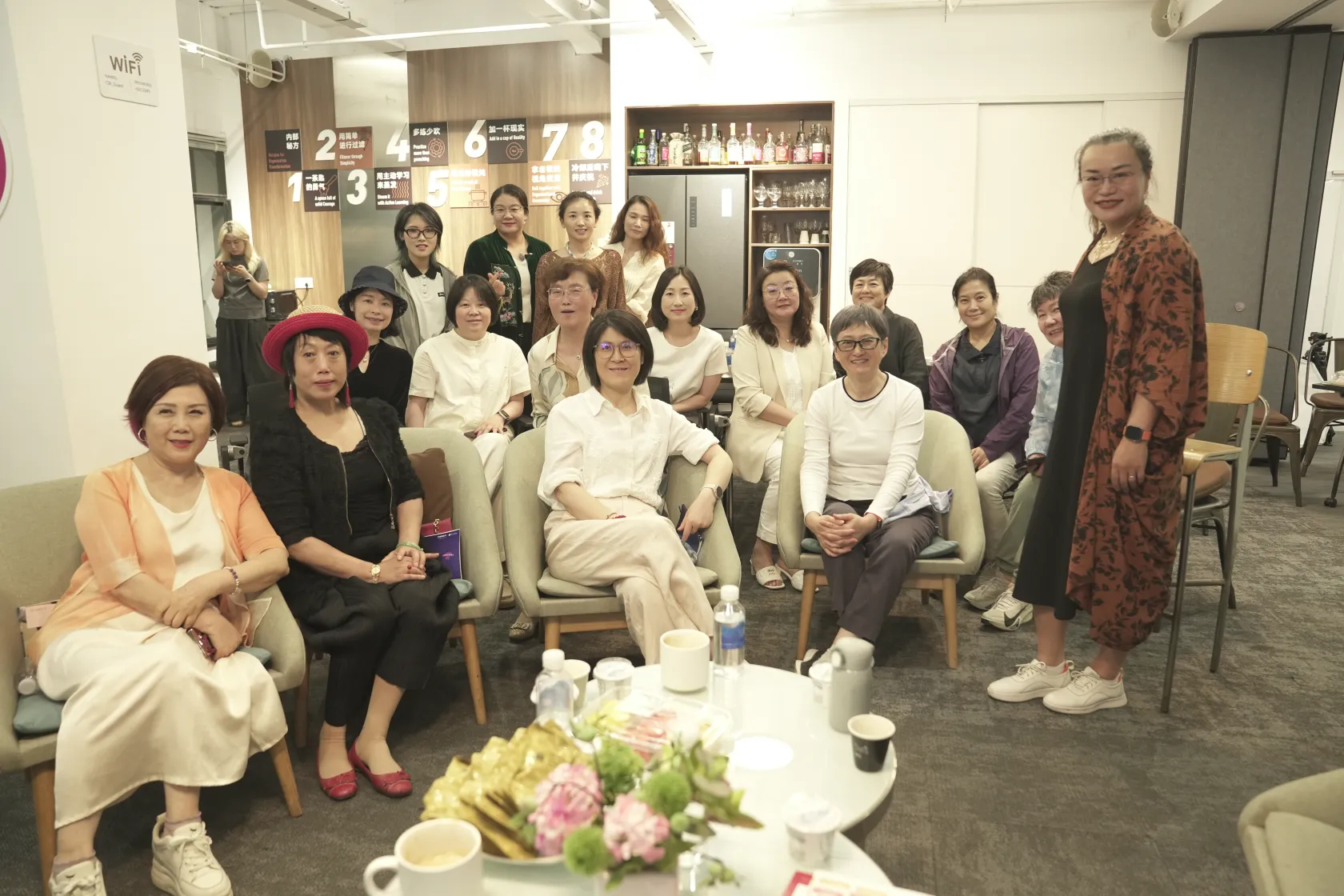
On June 24, 2025, the Design Anthropology Forum, jointly hosted by the Institute of Anthropology at Fudan University and China Bridge Group, under the guidance of the Shanghai Anthropological Society, was held in Shanghai.
During the forum, the Design Anthropology Committee of the Shanghai Anthropological Society was officially inaugurated.
Professor Jiucun Wang from Fudan University’s School of Life Sciences, President of the Shanghai Anthropological Society, emphasized in her opening remarks:
“Design needs the insights of anthropology, while anthropologists must also step beyond academia through design.”
The committee also released the Shanghai Initiative on Design Anthropology, advocating an approach grounded in understanding cultural contexts, human behavior, and the construction of meaning.
Through collaborative design, the initiative seeks to promote sustainable, mutually beneficial relationships among diverse stakeholders.
The forum opened with the announcement of the committee’s establishment and the presentation of appointment certificates, marking the official launch of a new platform for industry-academia collaboration and cross-disciplinary innovation.

Convergence of Ideas: Cross-Disciplinary Experts Explore Design Anthropology in Practice
Following the opening ceremony, the forum brought together experts from universities, businesses, and research institutions for an interdisciplinary dialogue on “Anthropological Insights × Design Innovation.”
Speakers explored the practical applications of design anthropology from diverse academic and industry perspectives.

Professor Jiucun Wang: Connecting Anthropological Understanding with Real-World Practice
Professor Jiucun Wang explained that design represents a concentrated expression of meaning, while anthropology seeks to enter the web of meanings through understanding and empathy toward people, events, and objects.
Her remarks established a central theme for the forum: combining deep insight with practical action.
Professor Jiucun Wang:
“Anthropology embraces a broad and inclusive perspective. We must not only draw upon the strengths of different disciplines but also contribute to their development. By learning from businesses and communities, we can achieve mutual growth through teaching and learning, and ultimately put knowledge to work for the benefit of society.”

Cathy Huang: Anthropology Explains Why, Design Determines How
Cathy Huang, CEO of China Bridge Group, shared her journey of integrating anthropological perspectives into design innovation, drawing on 14 years of experience applying design anthropology in industry.
She also examined the respective strengths and limitations of AI and design anthropology, exploring how their complementary capabilities can unlock new opportunities for innovation.
Cathy Huang:
“Anthropology helps us understand the ‘why,’ while design provides the means to address the ‘how.’ Combining the two is an extraordinarily powerful force for innovation.”
“Design and anthropology work together much like the left and right hemispheres of the brain. The key to breakthrough innovation is to embrace AI while deeply understanding people and their experiences in real-world contexts.”

Professor Tianshu Pan: Bringing Anthropology into Local Innovation
Professor Tianshu Pan, Director of the Institute of Anthropology and Ethnology at Fudan University, discussed the development of applied anthropology at Fudan.
He emphasized that anthropology should engage more closely with contemporary social realities and support locally grounded product development and innovation.
Professor Tianshu Pan:
“Contemporary international anthropology has shifted its focus from studying ‘the other’ to examining mainstream society. Against the backdrop of China’s rise, we should place greater emphasis on interdisciplinary innovation rooted in local contexts.”

Gang Huang: Slowing Down to Achieve Breakthrough Innovation
Gang Huang, Vice President of China Bridge, shared insights from his experience in business innovation.
He argued that truly transformative innovation often emerges not from rapid technological development, but from patient observation and a deeper understanding of everyday life.
Gang Huang:
“To conduct meaningful anthropological research and achieve genuine breakthrough innovation, we need to learn how to slow down in a fast-moving world.”

Jing Jin: Inclusive Design for an Aging Society
Jing Jin, Head of Age-Friendly Technology at the National Innovation Center for Technology in the Yangtze River Delta, addressed structural challenges in designing products and services for older adults.
She emphasized that an age-friendly society reflects a broader commitment to human-centered values and social inclusion.
Jing Jin:
“Age-friendly products face three major disconnects: between research and development and actual user experience, between products and service systems, and between technological advancement and social equity.”
“Designing for older adults reflects how inclusive a society truly is. In a genuinely age-friendly society, age should no longer be a major barrier for most people.”

Sissi Ren: Translating Human Needs into Tangible Service Experiences
Sissi Ren, Partner at China Bridge, used the health insurance sector as an example to illustrate how anthropological perspectives can help translate user needs into meaningful service experiences.
She explained that every touchpoint in service design can be understood as a symbolic expression in anthropology—transforming intangible human needs into tangible experiences.
Sissi Ren:
“Service touchpoints are similar to what anthropology calls symbols. They translate intangible needs into tangible forms of service delivery, helping people achieve their goals and recognize that their needs have been understood and fulfilled.”
Harvard Medical School Experts: Human Relationships at the Heart of Elderly Care
Professor Hongtu Chen from Harvard Medical School and Professor Ning An, Director of the Laboratory for Technology and Well-being of Older Adults, joined the forum through video presentations.
Focusing on elderly care, they explored the human-centered considerations involved in design anthropology and the development of care-related products and services.
Their presentations emphasized the importance of relationships over isolated solutions, as well as in-depth research and thoughtful value definition.
Professor Hongtu Chen:
“Care is fundamentally about maintaining relationships, rather than simply solving problems. The design process is more like gardening than engineering, more like jazz than a symphony.”
Professor Ning An:
“For advanced technology to become truly caring technology, we need to slow down and take several additional steps: immersive fieldwork, collaborative iteration, integrating technology into service delivery, and returning to the field for validation.”
“Behind every willingness to pay lies a hierarchy of values. Only when we recognize the importance of paying for dignity can we truly understand the deeper value of helping older adults with limited mobility maintain their personal hygiene.”
Key Insights: Design Anthropology Is Moving to the Center of Innovation
As technology advances at unprecedented speed, product and service innovation must go beyond efficiency.
We must ask whether greater efficiency actually translates into better outcomes for people.
This was a shared understanding among the scholars and industry experts participating in the forum.
Without a deep understanding of people and their contexts, even the most technologically advanced products may fail to achieve meaningful adoption.
Without the patience required for research and discovery, forcing rigid KPIs into the innovation process can undermine the conditions needed for breakthrough ideas.
Rapid iteration may generate a series of small successes, but it can also reinforce fundamental problems that become increasingly difficult to reverse.
Ultimately, innovators must ask themselves a fundamental question:
Are we designing transactions, or are we designing relationships?
This is precisely why anthropology matters in design innovation.
Today, we need slower research methods, deeper observation, and a renewed commitment to authentic human connection.

As outlined in the Shanghai Initiative on Design Anthropology, the establishment of the Design Anthropology Committee aims to bring together resources from academia, industry, and society.
Its mission is to establish an integrated innovation cycle:
Fieldwork Insights → Solution Design → Business Validation
Through this approach, design anthropology can expand into broader innovation contexts and generate meaningful impact.
Key Areas of Impact
- Business Innovation: Applying anthropological insights to identify opportunities for products, services, and business transformation.
- Cultural Heritage Revitalization: Connecting cultural understanding with contemporary design and innovation.
- Social Equity: Promoting inclusive solutions that address diverse human and community needs.
- Sustainable Development: Supporting long-term value creation for people, organizations, and the environment.
Core Mission
The committee will establish a collaborative ecosystem connecting industry, academia, research institutions, and communities.
It will encourage businesses, communities, and public institutions to identify forward-looking research topics addressing cultural challenges and unmet human needs.
By connecting field research with design development and business validation, the committee aims to make design anthropology a practical driver of innovation across sectors.


The Future Is Here: Accelerating Design Anthropology in Practice
The forum welcomed representatives from leading companies, research institutions, and universities, including ANTA, Mengniu, COMAC, HONOR, Huixiangfu, and Lenovo.
At the conclusion of the event, participants expressed enthusiasm about the establishment of the Design Anthropology Committee and shared how the discussions had inspired new perspectives on innovation.
Their reflections highlighted a significant shift: interdisciplinary collaboration is moving beyond theoretical discussion toward practical implementation.
One participant commented:
“This model, combining academic theory with industry practice, has the potential to overcome the traditional isolation of anthropology within the academic ivory tower.”
Another shared:
“Our organization is currently exploring new product opportunities, but we have struggled to find an effective approach to innovation. We are now planning to incorporate anthropological research into our future product development process.”
These reflections demonstrate the growing demand for approaches that integrate human understanding with practical business innovation.
Looking ahead, the Design Anthropology Committee will continue supporting Shanghai’s development as a City of Design, helping organizations turn anthropological insights into meaningful action.
Its ambition is to bring greater humanity into products and services while creating sustainable value for individuals, communities, and the environment.

Stay Connected: Explore More Insights from the Forum
Highlights and key presentations from the forum will be released in a series of weekly features every Thursday.
Follow China Bridge’s official WeChat account and share these insights with your team to explore the latest developments and practical applications of design anthropology.
Stay tuned every Thursday for exclusive forum highlights, video presentations, and additional resources.
Scan the QR code to follow China Bridge and access the latest content.
The Fudan–Harvard × China Bridge Design Anthropology Forum, held on June 24, marked more than a celebration of past achievements.
It was an invitation to shape the future.
Through inspiring presentations, real-world cases, and cross-disciplinary conversations, the forum opened a new chapter in the collaboration between anthropology and design.
Together, let’s define the next chapter of innovation through Anthropological Insights × Design Innovation.
Discover more from 桥中CBi China Bridge
Subscribe to get the latest posts sent to your email.